







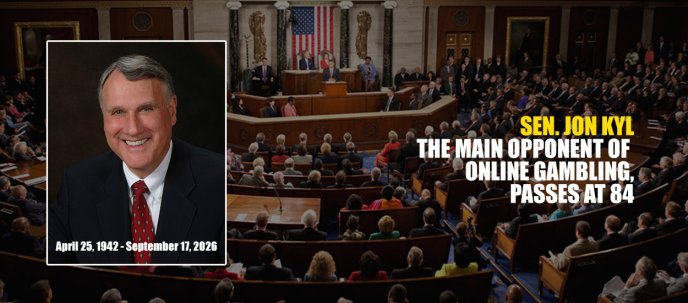
Online Gambling’s first political antagonist has died
As someone who has followed the online gambling industry for 35 years I vividly recall Arizona Senator Jon Kyl trying to halt online gambling in its tracks when he introduced the Internet Gambling Prohibition Act in 1997. By that time online gambling was starting to take off in places like Antigua, Costa Rica, Malta, the Isle of Man and Gibraltar and Kyl wanted to make sure that American gamblers were blocked from placing bets to sportsbooks and casinos in those locations.
Jon Kyl's Fight Against Online Gambling
Kyl wanted to amend the criminal code making it illegal to receive, or place bets on the Internet calling it a logical extension of the 1961 Wire Act. The act was far more draconian than later variations of it because it sought to charge not only companies offering their services to U.S. citizens, but also people in the U.S. who were placing the bets. 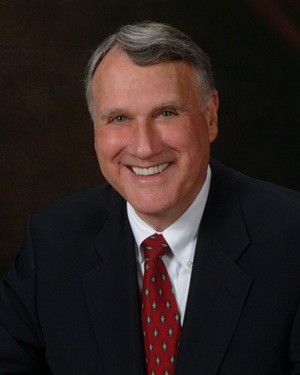 The act set to penalize companies involved in the gambling business with a fine up to $20,000 and four years in prison, and American bettors could be fined a minimum of $2,500 up to the amount they wagered online, if they were charged and found guilty. Kyl built momentum for his bill by saying that kids could steal their parents credit card “click the mouse and lose the house.” He was also concerned that problem gamblers would lose everything because it didn’t have the same responsible gambling controls as land-based establishments. To the shock of many the bill received bipartisan support and passed with a 90-10 vote in the Senate only to see the clock run out of it in the 105th Congress meaning it did not become law.
Kyl's Internet Gambling Prohibition Act Returns
Nevertheless, Kyle was not deterred and reintroduced the bill in 1999 with support by Democrat Senator Dianne Feinstein. This time the bill only looked to charge those involved in the gambling business and not individual citizens placing bets, and it included carve outs for horse racing, lotteries and fantasy sports. The hope was these concessions would be enough to get it across the finish line. The bill again failed to gain passage in the House since the Republican Congress then was focused more on the impeachment of Bill Clinton for acts that included an intern, a cigar and a blue dress. The bill did, however, become the impetus for Janet Reno to charge six American offshore operators with violating the Wire Act, after she claimed “you can’t hide online and you can’t hide offshore.” Those indictments led to the arrest, trial and conviction of Jay Cohen from World Sports Exchange and the whole new focus and direction for online gambling.
UIGEA Changes the Online Gambling Industry
Kyl’s bill was reintroduced twice more by Congressmen Robert Goodlatte and Jim Leach, but failed in the House both times until a version of it was attached to the Safe Port Act in 2006 under the title the Unlawful Internet Gambling Enforcement Act (UIGEA). This version of the bill did not go after the bettors or the offshore bookmakers but rather tried to block banks and other payment processing businesses like Western Union, hoping to cut the industry off at its knees. Kyl, Goodlatte and President George W Bush suggested to Senator Bill Frist to attach the UIGEA to the can’t miss Safe Port Act which passed by a 519 to 2 vote in the House and Senate with only two Congressmen, Jeff Flake and Ron Paul, voting against it because as Libertarians they thought this bill was too expensive and could be unconstitutional, not because of the inclusion of the UIGEA. Democratic Senator Barney Frank later called the UIGEA “the stupidest piece of legislation ever passed.”
How UIGEA Impacted Offshore Sportsbook
The UIGEA was the impetus for the eventual drop in the offshore industry's presence in the United States. Companies like Party Gaming, 888 and Sportingbet stopped all operations to the U.S., while software and payment providers including Cryptologic and NETeller stopped providing services to any company dealing with U.S. citizens. Also a couple of larger public bookmakers including Bowmans and WWTS sold their business to a different company. The bill also put a stranglehold on payment processing that made many companies struggle to process any deposits or withdrawals for U.S. citizens, eventually leading to the closures of online giants like World Sports Exchange and The Greek. The only companies that were able to survive were ones like Pinnacle, which found new markets outside the United States. Other comapnies found a new lifeline once Bitcoin became a viable source for payments in 2010. Even today the offshore industry is lucrative throughout North America, Asia and parts of Europe thanks to cryptocurrency.
Online Poker, the Wire Act and RAWA
Kyl’s main proponents through the years were land-based gambling executives and politicians like Harry Reid, the Senator from Nevada, Steve Wynn, the CEO of Wynn Resorts, and Sheldon Adelson, the CEO of Las Vegas Sands, who believed that online gambling would cannibalize their land-based businesses. Consequently, Kyl became somewhat vocal again in 2011 when the DOJ under Barack Obama issued an opinion that the Wire Act only applied to sports betting and hence online casinos and poker were legal. Kyl vocally opposed that decision saying that the DOJ bypassed Congress and if allowed to continue would open the floodgates to all forms of illegal gambling. At the same time, Kyl acknowledged that the online poker lobby was strong, so he partnered with Harry Reid in 2012 to support a new federal bill that would legalize online poker as long as all other forms of online gambling were banned. Reid and the Las Vegas businesses weren’t all that concerned about poker since it was a very small part of land-based revenues. The effort went nowhere but it is believed Kyl was also instrumental in advising Sheldon Adelson when Adelson tried to get the Restoration of America’s Wire Act (RAWA) passed on Capitol Hill. Nevertheless RAWA also went nowhere.
The End of Kyl's Fight Against Online Gambling
Kyl remained a Senator until 2013, although he did take on the roll again for three months in 2018 after John McCain passed away. It was reported that by 2018 Kyl resigned himself to the fact that trying to stop any new online gambling was a futile effort after the U.S Supreme Court (SCOTUS) repealed the Professional and Amateur Sports Protection Act in 2017 and states were rushing to introduce legal sports betting both at land-based locations and online. It is notable that after that SCOTUS ruling there was no comment by Kyl asking the judges to reconsider.
Jon Kyl's Lasting Legacy on Online Gambling
Jon Kyl died on September 16th at the age of 84 in Phoenix from complications of a neurological disease. Most longtime bettors will blame him for the derailment of a thriving industry in the late 1990s and early 2000s, even though his efforts in the end proved futile as states that were looking for a new revenue form that didn’t include taxes saw gambling expansion as a logical source. The offshore industry is still strong although many good companies were forced to shut down as a result of the UIGEA.
Two companies that likely are thanking Kyl today are FanDuel and DraftKings. The UIGEA had a carveout for fantasy sports but didn’t specify a time frame for fantasy sports contests, so FanDuel and DraftKings took advantage of the vagueness of the law and introduced daily fantasy sports, which became quite popular and profitable. More importantly, the success of the two companies led states to grant licenses first to the two companies for online sports betting as well as retail sports betting, which in turn gave them a head start and strong foothold in today's online sports betting industry in the U.S and Canada. Today FanDuel and DraftKings take almost 80% of all sports wagers placed online. So no doubt the management of FanDuel and DraftKings gave a farewell toast to the man who made them what they are today after they heard the news.
Read insights from Hartley Henderson every week here at OSGA and check out Hartley's RUMOR MILL!
JOIN OSGA!

Betting Scene
-

Bookie.ag Unveils Prediction Market-Style Sportsbook Design












Please login or sign-up to add your comment.
Comments (0): Subscribe by Email
There are no comments yet.
<< prev - comments page 1 of 1 - next >>