

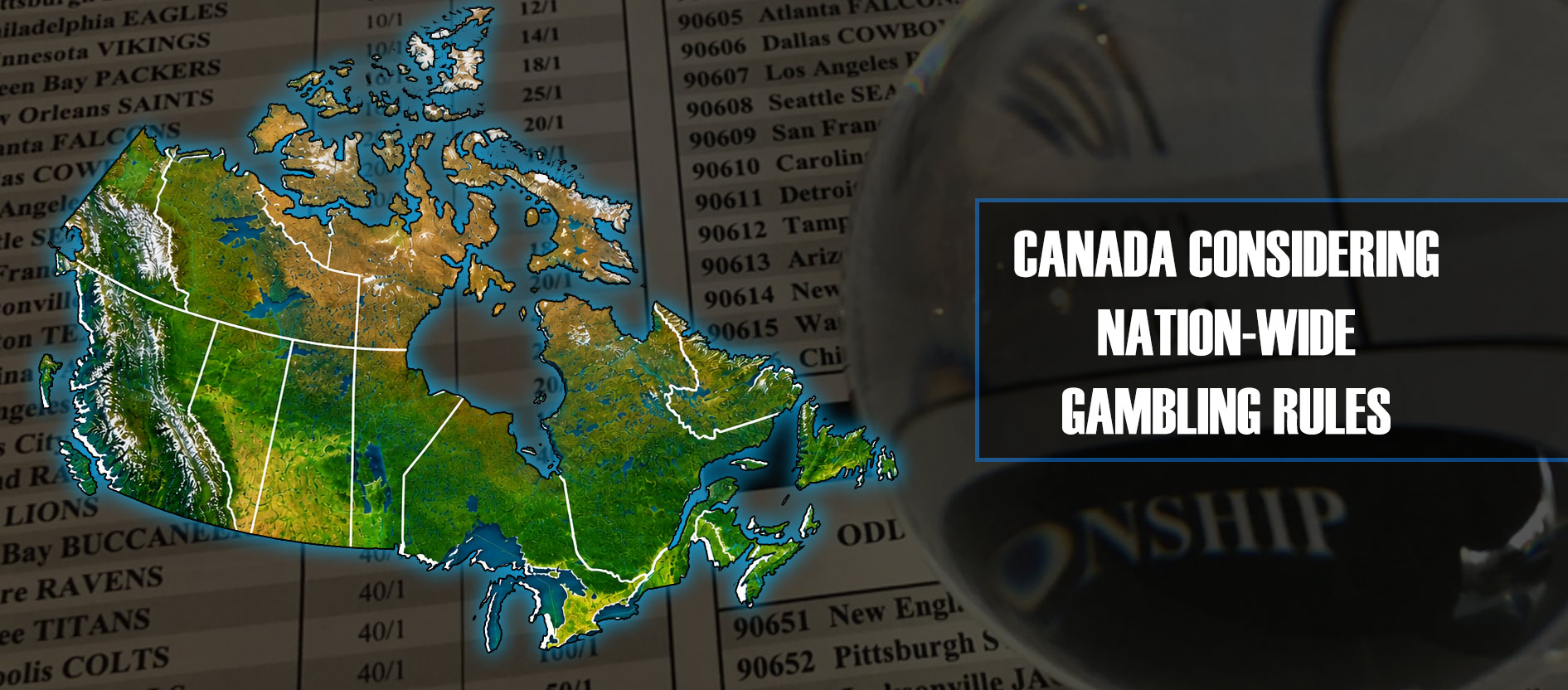
Will All of Canada Follow Ontario's Lead on iGaming?
When Ontario announced in 2022 that it was launching an open gambling market after the Supreme Court amended the federal gambling law to allow for single game sports betting, the province received condemnation from some faith-based groups and problem gambling groups. Many churches, spearheaded most by the Anglican church in Canada, said that Ontario was creating a climate that would prey on the most vulnerable in the province, and the church was specifically upset with the amount of gambling advertising from companies that could lead to youth gambling. And problem gambling groups reiterated the church’s concerns but also said that the private gambling companies had a different profit motive than the provincially run monopolies and hence would not be as stringent in stopping problem gambling as perennial losers were paramount to the bottom line. These comments are nothing new as gambling (except church bingos) have been viewed as a pariah by the church, who think it’s their job to protect people from themselves, and problem gambling groups are in the business of highlighting issues that stem from problem and underage gambling and trying to sell products and solutions that they say could help curtail some of those issues.
Ontario has been able to defend itself for the most part from the backlash by both groups by putting in programs like BetGuard, which allows players to self exclude from every gambling site in the province, and rules like disallowing advertising by athletes that would influence youth. But Ontario has been attacked by other provinces since the launch who say that Ontario the most populated province in Canada broke the law when it offered an open iGaming market.
Legal Challenges to Ontario's Open iGaming Market
Statements and lawsuits launched by the Canadian Lottery Coalition (now the Canadian Alliance for Regulated Gaming) that represents the lotteries in British Columbia, Saskatchewan, Quebec, Manitoba and the Atlantic provinces, said that Ontario exceeded its authority with the open market since Section 207(1)(a) of the Criminal Code says that gambling is strictly illegal in Canada unless a provincial government explicitly "conducts and manages" a lottery scheme in that province.  Ontario said it was abiding by the law since it was still conducting and managing gambling via the AGCO (Alcohol and Gaming Commission of Ontario) which is the regulator, along with its subsidiary, iGaming Ontario, and thus gambling sites are not completely independent.
Ontario's gaming framework initially faced a legal challenge from the Kahnawake Gaming Commission, with support from several provinces. However, Ontario won, as the court said that Section 207 (1) (a) did not mandate that all operations had to be overseen by the province, just that province had to have the ultimate decision-making authority which the courts said it did by appointing a government-run regulator. Alberta, which had been sitting on the sidelines for a few years watching the Ontario market, decided to make the move as well to an open market this year, and like Ontario, the open market has been a resounding success.
Last year Ontario asked the court for an opinion on whether they could offer gambling to other jurisdictions to help increase volume and make poker, (which only currently accounts for 3% of revenue in the province) more viable, as well as creating an opportunity for daily fantasy sports to be re-introduced in the province, which many citizens have asked for. The courts heard the arguments and it’s not clear how they will rule, although there is some indication that the court is leaning towards allowing it. Not surprising the other provinces are not in favor of the idea and said in a court document that allowing other jurisdictions into Canada “could lead to the further proliferation of illegal online gambling in the jurisdictions in which they operate." They note that their citizens are being lambasted by ads from offshore companies and Ontario gambling advertising since Ontario launched its open market. Ontario has rightly said that has nothing to do with them and it’s up to the provinces to control illegal advertising.
Ontario's iGaming Success Puts Pressure on Other Provinces
In fact, since Ontario’s open market launched in 2022 the channelization rate (percentage only using legal sites) is close to 91% compared to about 50% in British Columbia and about 40% in the Atlantic provinces. Analysts note that the rate is so high in Ontario because private operators offer more gambling options, better payouts, better promotions and a better experience than the provincial monopolies. In Ontario when only OLG (Ontario Lottery and Gaming) was legal the channelization rate was about 30% which was one of the reasons the province moved in the direction it did. So most analysts have told the other provinces that if their real goal is to stop people from betting offshore, or possibly in Ontario or Alberta via a VPN, then the only logical solution is to follow Ontario and Alberta’s lead.
Regardless, the other provinces have been very reluctant to consider an open market until now.
Open gambling has become a political issue with conservative governments more willing to endorse private operators than Liberal or Socialist governments since Conservatives believe that private companies can generate more revenue that can be used to fund social issues like education, healthcare and infrastructure without raising taxes. But Liberal and socialist governments are more concerned about the possible social ramifications including addiction. It has been agreed by all provinces, including Ontario and Alberta, that lotteries and horse racing should not be included in any open market and should be the sole role for the lottery corporations and the racetracks.
But again, things are changing.
The Quebec government under Liberal rule by François Legault and Christine Fréchette from 2018 until last week rejected an open gambling market, but the new, more right-wing Parti Québécois government led by Paul St-Pierre Plamondon, who just took power, seems far more open to the idea of private operators.  In St-Pierre Plamondon’s platform he expressed an interest in eliminating the Loto-Québec monopoly on iGaming and following the Ontario and Alberta’s lead, since he said that iGaming in Québec currently is the wild west and is unsustainable.
And in British Columbia, the province voted in Progressive Conservative premier Lorne Doerkson replacing the NDP Premier David Eby. It doesn’t seem that gambling expansion was in Doerksen’s platform, but there’s no doubt the province under his purview will look into the possibility of an open market for the exact same reason the Conservative governments in Ontario and Alberta did. And PlayNow.com that is the province’s online gambling site that operates under the British Columbia Lottery Corporation has partnered to run gambling for the provinces of Manitoba and Saskatchewan as well.
Saskatchewan has a conservative premier, Scott Moe, who has been in power since 2018, while Manitoba has a left wing premier Wabanakwut "Wab" Kinew, who was elected in 2023. Despite his affiliation it’s hard to see Manitoba being the sole province west of Ontario standing out on its own with a provincial monopoly for gambling if all other provinces move to an open market. One of the biggest concerns expressed in Saskatchewan and Manitoba was the effect of private gambling on First Nations, but Alberta addressed that by providing a percentage of iGaming revenue to the First Nations groups and also allowing casinos operated by the First Nations to compete in the open market. It’s uncertain if that would be sufficient to alleviate the concerns of the indigenous groups.
Could New Brunswick Open the Door for Atlantic Canada?
That leaves the Atlantic provinces, which includes New Brunswick, Nova Scotia, Prince Edward Island and Newfoundland & Labrador. All the provinces run gambling through the interprovincial monopoly called the Atlantic Lottery Corporation (ALC) and while the provinces have been quite Liberal with federal voting, provincially they are far more conservative.
Three of the provinces have conservative premiers led by Tim Houston in Nova Scotia, Rob Lantz in PEI and Tony Wakeman in Newfoundland & Labrador, while New Brunswick has the sole Liberal premier in Susan Holt. So it’s somewhat surprising that the first province to consider abandoning the ALC monopoly and launching an open gambling market in the Atlantic provinces is by New Brunswick. René Legacy, the New Brunswick finance minister stated that Holt and the New Brunswick government are considering opening the gambling market in the province to private companies in response to the amount of online gambling being wagered in grey markets. According to reports New Brunswick citizens only wager about 35% of its iGaming through the Atlantic Lottery Corporation and the province is considering privatization to increase those channelization rates.
"Online gaming is continuously evolving and the number of options – regulated and unregulated – continues to grow," Legacy said in an interview at a recent conference. "Government has a responsibility to ensure New Brunswick’s legal and regulatory framework keeps pace with an evolving gaming environment."
It seems like everybody in the industry agrees that the Atlantic provinces are a “one for all, all for one” type of system, so if New Brunswick opens its market to private companies then the other provinces will follow suit. But every analyst in Canada I spoke to also agrees that it has less to do with decreasing people betting offshore and more to do with the enormous revenue that Ontario has generated since 2022.
In 2025 Ontario operators handled more than $98 billion in wagers and $4 billion in gross gambling revenue. This represents almost $1 billion for Ontario coffers, when licensing fees are included with the 20% of GGR that goes to the province. It also represents a 26% increase from the 2024 calendar year when about $78 billion was wagered and gross gambling revenue was just under $3 billion, and a 66% increase from 2023, the first full year that Ontario had an open market. And gross gambling revenue almost doubled from 2023 to 2025. According to sources Alberta’s early figures are also impressive, so it’s clear that New Brunswick realizes that putting its head in the sand and just accepting a low channelization rate is not the solution.
They argued that the U.S. model created unnecessary frustrations for operators, particularly when it came to promotional opportunities, varying tax rates, advertising restrictions and geolocation requirements. A consistent regulatory framework across Canadian provinces would help eliminate many of those challenges if other provinces decided to legalize iGaming. At an early SBC Canada conference following Ontario’s launch, several panelists representing gaming operators urged Canada to adopt a standardized approach to iGaming regulation rather than the patchwork system seen in the United States. They argued that the U.S. model created unnecessary frustrations for operators, particularly when it came to promotional opportunities, varying tax rates, advertising restrictions and geolocation requirements. A consistent regulatory framework across Canadian provinces would help eliminate many of those challenges if other provinces decided to legalize iGaming.
I recall speaking to someone from FanDuel at the time and he told me that if Canada could become one gambling market where they could issue one standard set of advertising, promotions and products for every person over the age of 18 (approximately 35 million people) then Canada as a whole would become a far more attractive place to invest and they would happily be partners with all provinces to ensure that everybody benefits from their presence.
Canada Could Have a Nationwide Open iGaming Market by 2030
It's uncertain just how fast can we see the whole country with a legal open market. No doubt the result of the British Columbia election will be paramount, but if B.C. and Quebec move towards open gambling, then it’s only logical that the dominoes will fall. It’s not unreasonable to believe that a full open gambling market across the country could occur by 2030. After all Manitoba, Saskatchewan and the Atlantic provinces combined only make up about 12% of the Canadian population so it would make little sense for them to go it alone. And if Ontario is successful in allowing other countries to comingle pools, then Canada could quickly become the poker and DFS capital of the world.
So while it’s clear that most Canadian provinces appear content to maintain their iGaming monopolies, allowing them to control operations, retain revenue and address concerns such as underage and problem gambling, provincial leaders also recognize that the status quo isn't working. Low channelization rates remain a major concern across much of Canada, particularly when compared to Ontario and Alberta, where rates reportedly exceed 90%.
The only logical solution is to follow the leads of Ontario and Alberta. Four years of legal iGaming in Ontario has proven that the private operators are more successful in getting citizens to wager legally and generate revenue. They have also shown that they are very adaptable and willing to work with the regulators to minimize harm with province-wide self exclusion systems and monitoring to spot problem gambling. There undoubtedly has been an uptick in some social issues since the Ontario launch, and the operators are working with the governments to address those before they get out of hand. After all as the FanDuel rep said to me “in jurisdictions we operate, we consider ourselves partners with the government and have the same goals to stop problem gambling.”
Read more sports betting analysis and gambling industry insights from Hartley Henderson at OSGA. For more industry news, speculation and commentary, check out Hartley's Rumor Mill.